‘Painting on a Tangent’ by Hans-Jürgen Hafner
’By hand: that is the crucial point’ (Richard Hennessey)
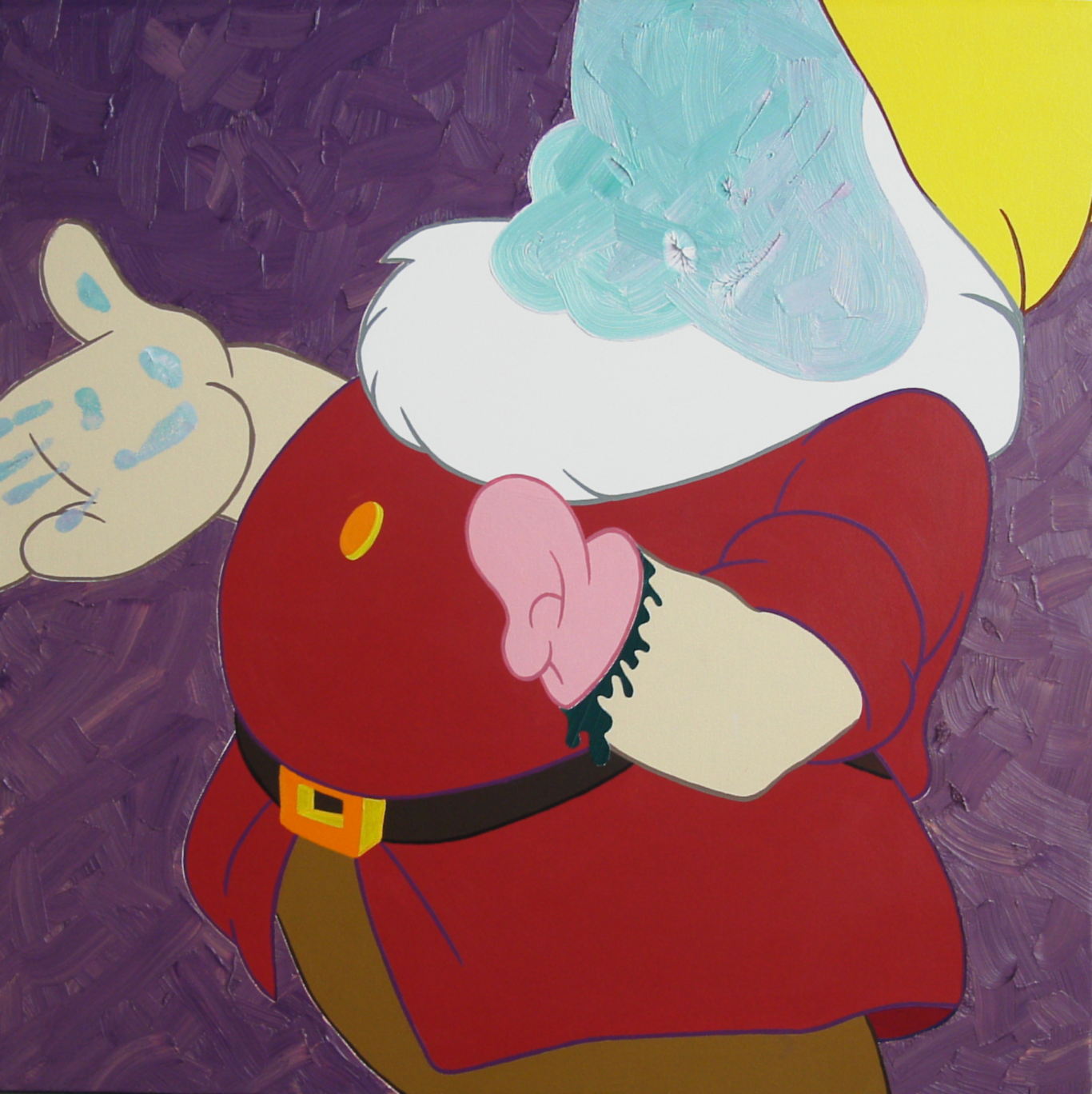
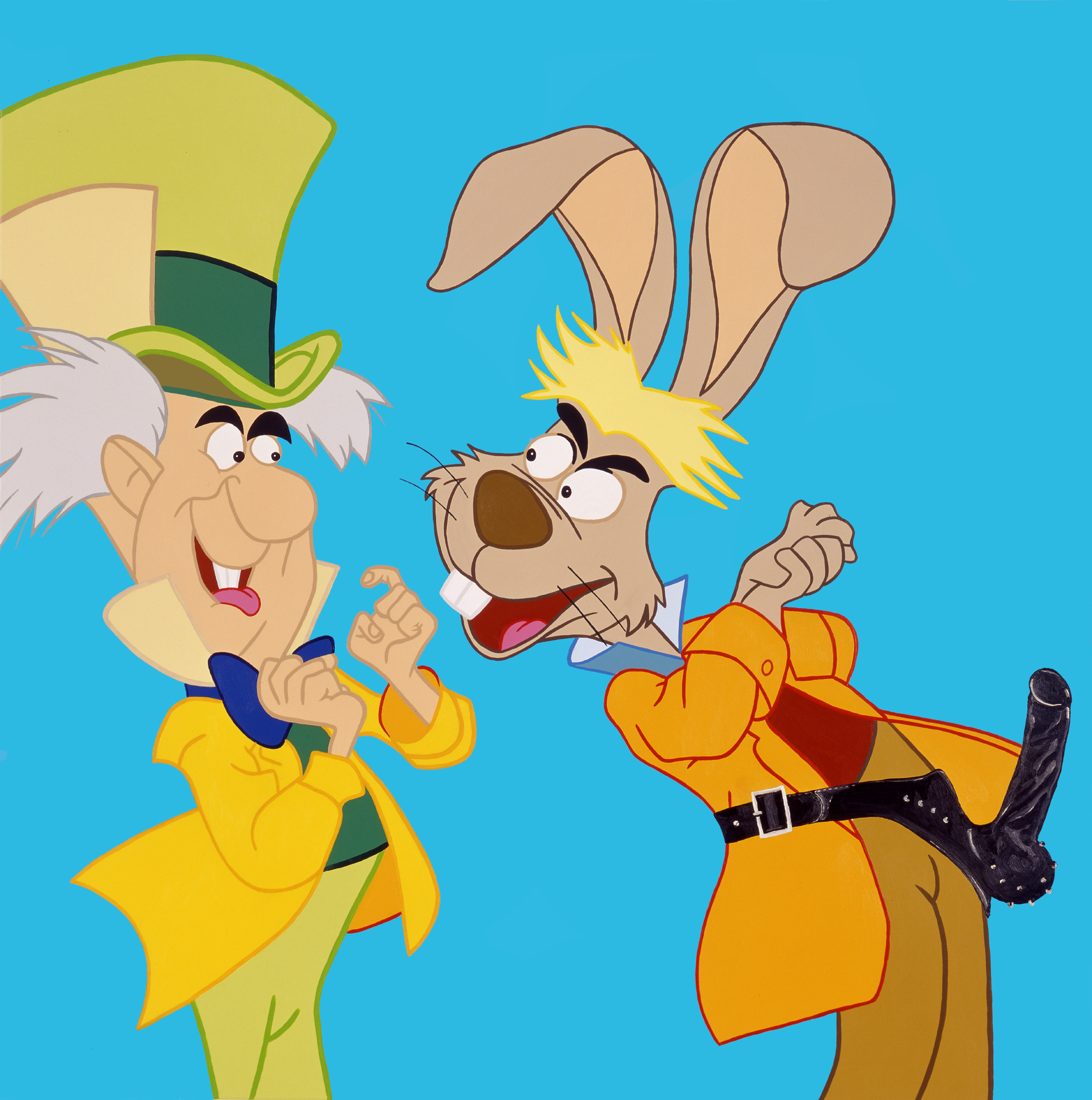
Take ‘Slapman’, for example. There is a detail in this picture that immediately catches the eye. The picture - a traditionally executed painting of oil and acrylic on canvas by the artist Ivan Fayard - seems at first glance to deal in bold terms with the figure/ground relationship. At its centre is a familiar motif, now brutally distorted by means of cut-up and other techniques, but still recognizable as an appropriation from Disney. Over the coarsely painted pastose violet background, in a kind of mosaic of contiguous and occasionally overlapping blocks of colour, is the battered figure of a dwarf from the story of ‘Snow White’. A light blue block of paint occupies the space where the chubby cheeks should be, and a fleshly pink stump covers the end of the dwarfís left arm.
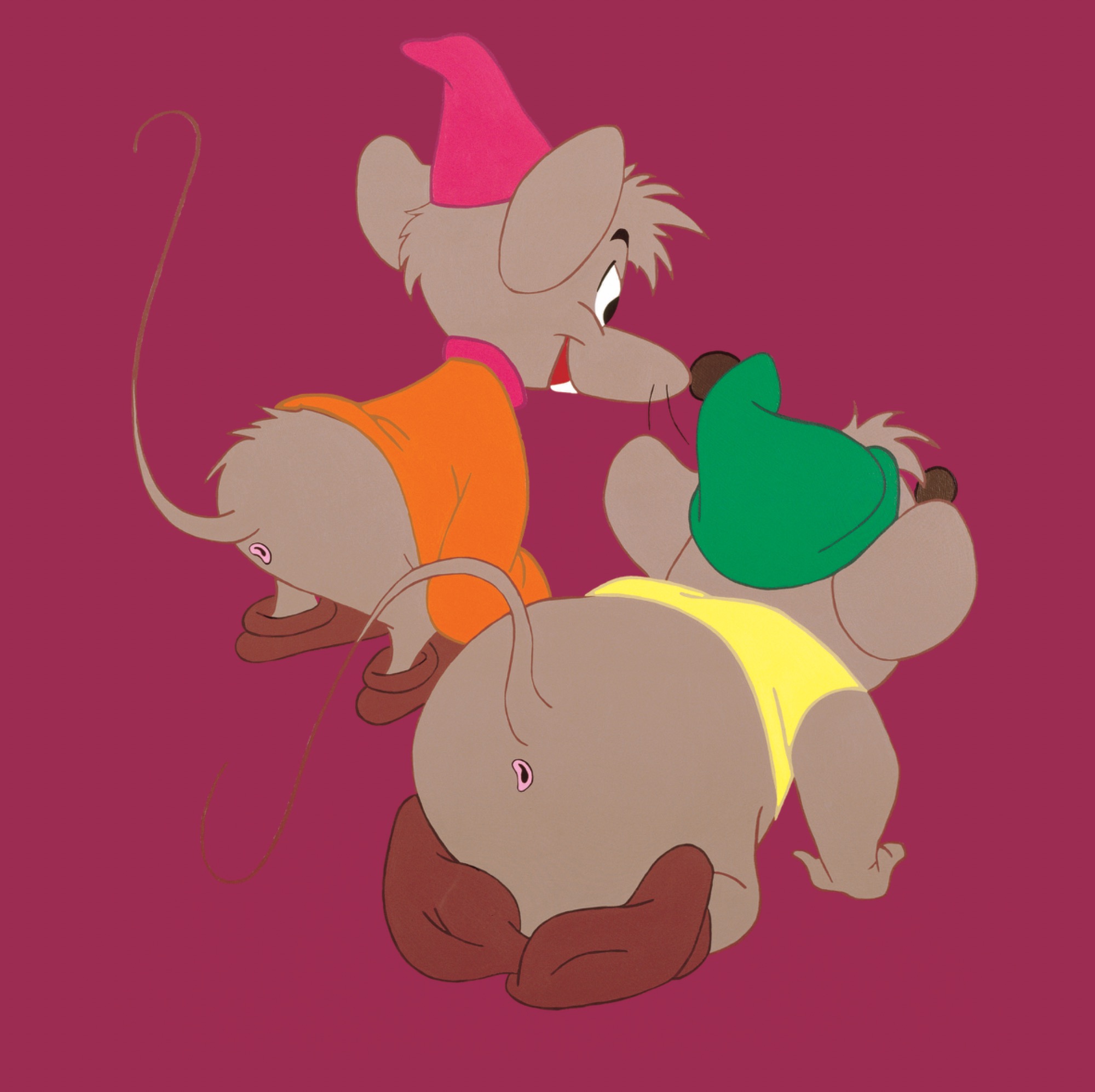
‘Slapman’ (2003) is one of a series of paintings based on motifs from Snow White, Alice in Wonderland, 101 Dalmatians and The Little Mermaid that Fayard has appropriated from the popular world of Disney and grouped together over a number of years under the title ‘Usurpers’. The spirit of the series seems to be one of aggressive humour. The hunchback of Notre Dame has a valve on his back so that his hump can be inflated, and the mice have visible arseholes. The paintings are full of extra details, some subtle, others unmistakably provocative; but all designed to shift the carefully desexualized Disney paradise into a threateningly physical realm. The innocence of the cartoon is overlaid with embarrassing new features. These are pictures that invite interpretation, gesturing towards a critique of the media or an art-history-based approach that traces the links between Pop Art, visual culture and appropriation. Yet there are also narratives to be found within the dramaturgy of the series: from Fayard’s coolly distant paintings, where the composition is homogenized on a single plane (see ‘Jaune et rose’ (2000) or the quasi industrial ‘Vert, marron et bleu’ (2001)), to formal pastiches such as ‘Soualau’, ‘Slapman’, the different methods that Fayard uses for his paintings demand to be seen as a process of evolution… with the hazy swarm of flies lingering around Mowgli’s bottom -- inverted, with their black wings painted hastily and defiantly onto the picture’s surface, as if the artist were short of time or had idly decided to add them later -- as a possible mid-point of this genesis... But yes. The hand. The hand is the crucial point. Or at least the point of fracture. That which is implicit in the elements of the production process or in the juxtaposition of different painting techniques is staged for all to see in ‘Slapman’ : the presence of a painter and maker, which is usually documented and answered for from within the brushwork, is now imported into the picture with utter frankness in the form of two handprints. The picture gives the impression that ‘Slapman’ has reached up with his hand to check the oily-blue texture of his face: yet at the same time, the presence of the handprints invades the apparent autonomy of the picture, gesturing towards what lies beyond it -- pointing to a producer, to a painter: to the person responsible for this signature. The person behind the picture comes into play.
’The hands can’t get what ya eye can’t see.’ (Muhammad Ali)
Eyes are a recurring motif in Ivan Fayard’s work: in ‘Usurpers’, eyes are deformed and misplaced; they are placed on or around the characters arbitrarily like accessories, or are missing altogether. In the paintings of ‘Fichiers’, the background colour becomes the focus of attention, staring out of empty eye sockets, revealing the eyes’ absence. Displayed within the dramatic focus of individual spotlights, these round canvases -- tondos -- have been painted in black and white, plus two additional colours (or more precisely, one lighte and one darker shade of the same primary colour), and have varying formats (differing, in this instance, in terms of their diameter). Hung in casual all-over style, they occupy the walls of an exhibition: the barely fashioned circles appear in roughly concentric patterns, the round canvases edged in black, with the picture slightly decentred within the tondo. Raised on canvas, in 2-D plus substance, the stylized eyeballs stand out from the wall: the shiny surface of each painted iris is impassive; the staring pupils impenetrable. In ‘Tondibulles’, a substantial series that Fayard has been working on since 2001 (and the pieces of which he has laconically numbered, but not named), Fayard pushes at boundaries. Fayard limits the surface of each canvas to the bare essentials, so as to methodically, almost mechanically, reproduce an ‘eyeball’ design that has previously been defined on the computer. In so doing, he deliberately relinquishes the possibility of using nuances, of arranging the picture differently, or of exhibiting painterly skill. (In any case: who would be surprised today by industrially rationalized production and the separation of author and executor?) But that is not all: in choosing the tondo-format, Fayard takes the concept of the picture to its limits. In ‘Tondibulles’, Fayard does not only explore the ways in which a picture comes together on a surface in the interaction between colour and composition on canvas, for the painting’s theme is also its form and its transposition into painting (1): it takes shape on the rounded canvas and its ever-present support. The picture becomes an object; as does the critical shadow that it casts. (In fact, Fayard reworks the form of the mandala to expand this fluid series further...) Moreover, whenever these pictures are exhibited, they extend into the room, even as flat objects. The ‘Tondibulles’ theatrically dismiss distance as a condition of the relationship between the viewer and the work of art. This is to their advantage, and they stare back at the viewer as if activated, transforming the exhibition into a kind of stage -- structured by the axis of their gaze. They assign the viewer a role in the tableau; the pictures acting as placeless frames...
Stepping back for a moment: ‘Painting continues to have possibilities exactly because it is so hard to define.’(David Reed)
Exhibitions of Ivan Fayard’s work are not always easy to look at. The viewer is confronted with Fayard’s obvious faith in painting; with the juxtaposition of thematically diverse plots; and with the diversity of the techniques used for production. Take ‘Fichiers’: empty staring eyes with shiny varnished surfaces painted in three colours which occasionally run together to form iridescent webs of new and unidentifiable shades. Next to the fake shine of the serially produced ‘Tondibulles’, the ‘Fichiers’ pictures resemble a painterly feast. But the differences between other works by Fayard are still greater; from the virtuosity of the paintings upon painting of, for example, distorted, morphing pixels (Fayard was a student of Bernard Frize), through the simple large-format chiffre-picture, ‘Hermann, Dimitri, Fiona, Erwin’ (1999) to the striking hand-as-signature expressionism of ‘Populations’ (1999). Not to mention the potentially functional table/picture objects collected under the title-pun ‘Ejectables’; the coloured walls; the murals; the sculptures; and the site-specific displays. The viewer struggles to find a common denominator, keen to master the wealth of exhibits and to pin down their creator, Ivan Fayard, despite the breezy rigour of the subjective rules with which he works, which self-reflexively defy the category ‘style’. It is all too easy to identify talent, finesse, inventiveness... It is also easy to describe the different approaches used by the artist; and only slightly more difficult to systematize them. But to arrive at a formal canon would be no more than a temporary solution, resulting in nothing but the arduous material of criticism. Stepping forward again, in front of the canvas: After the anecdotal provocations of ‘Usurpers’, and equipped with the disappointing knowledge of the impressive variety of Fayard’s painting techniques and his range of themes, the handprint on ‘Slapman’ remains an enticing opening into the picture; a link between the illusion and the physical reality of the producer and viewer.
Porousness: ‘What Crimp found objectionable... was less that ‘it had all been done’ than that the medium was prized by its enthusiasts for the painter’s touch -- that the paint was laid down by hand.’ (Arthur C. Danto)
Danto is referring to Douglas Crimp’s much discussed essay, ‘The End of Painting’ (2). Crimp’s criticism of the medium of painting was formulated to the backdrop of the early 1980’s, when painting was undergoing a euphoric revival. Crimp criticized the celebration of painting as reactionary, citing the emphasis on the artist-genius and the promotion of a ‘metaphysics of touch’ (3). (There are evident parallels with the way in which painting is currently exalted and its stars and genii revered: people everywhere are beginning to partake again: to celebrate painting and to buy pictures by the square metre before lovingly/dutifully hanging them...) In the wake of Crimp’s, now historic, critique, and in the face of countless different subjective approaches to painting, many of them often relevant only unto themselves, but all defiantly asserting their validity, it is time to pose once more the question as to the possible meaning of painting; as to what is specific to painting aside from its function as a means of producing pictures. Caught in the double trap of ‘it’s all been done before’-pluralism and the fetishization of folklore, material, style and the ‘great painter’, the specific meaning of painting as a contemporary medium must be continually deciphered, resystematized, re-evaluated and also desecrated. And in all this there is a responsibility to the viewer. ‘Slapman’ thematizes this responsibility. Within the layers of gesturally sedimented irony and usurped stories specific to the series, there is a self-reflexive scepticism towards the picture. The juxtaposition of different techniques and methods makes visible the process of production and decision-making. But this is more than just a showy display of painterly skill or an empty referential product, a sampler of skilfully chosen allusions. As a result of the two handprints -- whether thoseof the artist or of somebody else: the point is immaterial -- that demonstratively import a measure of reality into the picture and that hover between constituting a signature or an iconoclastic gesture, the painting is no longer at a safe distance and extends perspectivally into the exhibition space.
1. This is also an allusion to the emancipatory impulse of the shaped canvas, as developed by Leon
Polk Smith (1906-1996) in the late 1950’s after his first tondos of 1947.
2. First published in: October No. 16 (Spring 1981) pp. 69-86. A German translation (the source
of the (indirect) Hennessey citation at the beginning of this text) appeared under the title ‘Das
Ende der Malerei’ in: Douglas Crimp: ‹ber die Ruinen des Museums, Dresden-Basel, 1996, pp.
100-122
3. Ibid, p. 111
* * *
« Peinture tangentielle » par Hans-Jürgen Hafner
« Par la main: c’est là le point décisif. » (Richard Hennessey)
Par exemple « Slapman ». Sur un arrière-plan violet et pâteux, aux coups de pinceaux grossiers, est inséré un fragment de la figure maltraitée d’un nain issu du scénario de Blanche-Neige, résultat de plusieurs couches de couleur apposées ou en partie superposées: la frimousse aux joues rondes est remplacée par une surface de couleur bleue claire, et le bras gauche se termine par un moignon couleur rose peau, comme accolé. « Slapman » (2003) fait partie d’une série d’appropriations de motifs, d’assimilations peintes à partir de l’univers populaire des personnages Disney que Ivan Fayard a rassemblé en l’espace de quelques années sous le titre d’« Usurpers » avec, apparemment, un humour agressif. Le bossu de Notre Dame se voit affublé d’une valve sur sa bosse, comme pour être gonflée, des souris exhibent distinctement leur anus. Partout l’on rencontre ces petits ajouts, du plus subtil au manifestement provoquant, qui font basculer le paradis Disney soigneusement désexualisé vers le corporel menaçant, et entremêlent le niveau innocent du dessin animé avec la surface matérialisée de la gêne. Des horizons d’interprétation séduisants émergent de ces peintures, proposant des aspects de critique des média, des références au contexte d’Histoire de l’Art, entre Pop Art, Visual Culture ou Appropriation. Au sein même de la dramaturgie d’une série, des histoires se déroulent: les méthodes artistiques d’une composition plutôt froide et distanciée, homogénéisée en une seule surface. Ce que suggère cette mise en abîme du processus de réalisation, ce face à face radical des procédés de peinture, est mis en scène avec emphase dans « Slapman »: la présence du peintre et de l’acteur, habituellement documentée et certifiée par les gestes tracés au pinceau, est importée ici dans l’image avec l’immense immédiateté d’une double empreinte de main. Certes, « Slapman » paraît avoir testé l’huileuse consistance bleue de son visage avec la main. Néanmoins, l’empreinte transperce les lois propres à l’espace d’illusion qu’est le tableau, désigne un extérieur, même plus: désigne le producteur, le peintre, l’auteur de cette signature, fait entrer en jeu l’Homme.
« Le poing ne peut atteindre ce que l’œil ne voit pas. » (Muhammad Ali)
L’œil est un motif récurrent dans le travail de Ivan Fayard: dans les « Usurpers » par exemple, les yeux sont déformés ou déplacés, sont ajoutés au hasard tels des accessoires, ou tout simplemen omis. Dans les versions des « Fichiers », la couleur du fond – sur laquelle se concentre l’attention – fixe le spectateur dans les orbites morts. Quelques spots de lumière créent un effet dramatique de focalisation sur des toiles rondes, des tondos en différents formats (ici en diamètres), façonnées systématiquement en deux couleurs (plus précisément dans un ton clair et un ton foncé d’une couleur primaire), rehaussées de noir et de blanc. Leur accrochage souple occupe toute la surface des murs de l’exposition: ces œuvres au cadre noir autour de la toile ronde, sont, à partir du centre du tondo, le plus souvent composées de formes circulaires, légèrement décalées, organisées l’unepar rapport à l’autre de manière plus ou moins concentrique. Dans la vaste série des « Tondibulles » (depuis 2001), laconiquement numérotée, Ivan Fayard vise les frontières. Sur la surface de la toile, il se limite au strict nécessaire, afin de générer de façon quasi mécanique, dans un déroulement rationalisé des étapes du travail, le design « Globe de l’œil », déterminé au préalable par ordinateur. Il renonce ainsi complètement aux nuances, aux marges de composition, évacue sciemment le savoir-faire du peintre. (Qui est-ce que la production industrielle rationalisée et la séparation entre auteur et exécutant surprendrait ici?) Il y a encore plus explosif: avec le format du tondo, Fayard pousse le concept de « l’image » à ses limites. Car il ne fait pas qu’analyser les moyens de l’invention de l’image sur la surface, dans le jeu entre couleur et composition sur la toile. Bien plus, le thème de l’image lui-même constitue sa forme et sa réalisation et se concrétise sur le rond des Shaped Canvas en symbiose avec la présence massive du cadre porteur sous-jacent: l’image devient objet, tout en jetant une ombre affirmative et critique (sur la base de paraphrases de mandalas, Fayard continue d’étendre cette série aux contours fluides sous le nom de Spermators..). De plus, les tableaux s’avancent, dans leur accrochage souple, en objets plats dans l’espace. Les «Tondibulles » brisent à leur avantage la distance de façon théâtrale, comme condition de la relation spectateur/image: ils fixent – presque animés – à leur tour le spectateur, laissent l’espace de l’exposition se transformer en scène, structurée par les axes de vision de leurs regards, et attribuent au spectateur son/un rôle dans le tableau; les peintures font alors fonction de cadres sans lieu.…
Un pas en arrière: « La peinture continue à développer des possibilités justement parce qu’elle est si difficile à définir » (David Reed)
Une exposition des travaux de Ivan Fayard peut irriter: par l’optimisme pictural affiché de prime abord par exemple, puis par la confrontation de structures thématiques très différentes, mais plus encore au vu de la diversité des techniques de production des ébauches. La surface en trois couleurs différentes et au vernis éclatant de chaque tableau des « fichiers », avec leur regard fixe et vide, qui recèle des traces du passage des couleurs, des franges irisées de mélanges incalculables, s’impose par exemple en véritable délice pictural, comparée au brillant sériel et factice des « Tondibulles ». Plus radicale encore est la différence entre d’une part les peintures-matériaux à la morphologie distordue, réalisée en pixel de manière virtuose (Ivan Fayard fut l’élève de Frize), et l’image-lettre « Herman, Dimitri, Fiona, Erwin » (1999) en grand format, manifestement sans art, et d’autre part les expressionnismes des « Populations » (1999), réalisés avec l’effectivité frappante de la main en empreinte. A cela devraient s’ajouter les tables et images, objets fonctionnels au titre ambivalent « Ejectables », les murs colorés, la peinture murale, les sculptures, les installations d’expositions particulières. L’on cherche alors le lien entre ces travaux; le spectateur tient à maitriser cette abondance. Il tient à déterminer les catégories du « style », de l’auteur Ivan Fayard, du peintre, et ce malgré la cohérence lâche d’un système manifestement subjectif de règles, incluant leur propre transgression. Mais il serait trop facile d’attester talent, finesse, richesse d’idées, etc. Et il serait tout aussi simple de décrire les différentes amorces de l’artiste, et peut-être même, avec un peu d’effort, de les faire entrer dans un système. Mais quel gain autre qu’une simple étape apporterait ce canon formel ? Le lourd appareil du commentaire ? Quittons ce survol et revenons à la toile. Après les provocations largement anecdotiques des « Usurpers », que charge la connaissance décevante de la multiplicité impressionnante des méthodes depeinture, ou plus exactement des techniques a-/virtuoses et des thèmes, c’est à nouveau l’empreinte de la main sur « Slapman » qui dans l’image constitue une ouverture stimulante, un lien menant hors de l’illusion, dans la réalité physique du producteur et de son public.
Perméabilités: « Crimp s’érigeait moins contre le sentiment du « tout à déjà été fait » , que contre l’enthousiasme de ceux qui faisaient l’éloge d’une oeuvre pour l’empreinte manuelle du peintre - pour le fait que la peinture était appliquée à la main » (Arthur C. Danto)
Il s’agit ici de l’essai très commenté de Douglas Crimp « The End of Painting ». Le théoricien d’art formule sa critique du médium « peinture » sur l’arrière-plan d’un renouveau euphorique de la réception de la peinture au début des années 1980, qu’il voit rongée par des tendances réactionnaires, dans lesquelles il diagnostique une surestimation des peintures-génies et l’affirmation créatrice d’une « métaphysique de l’effleurement humain ». Les parallèles avec la réception exaltée actuelle de la peinture et son intronisation de stars et starlettes, maîtres et génies inclus, ne sont que coïncidence: partout, on déguste à nouveau le trait, on célèbre l’invention de l’image, on achète en mètres carrés et soigne sagement ses accrochages...) Dans le sillon de la critique de Crimp, historique, mais également dirigée contre l’affirmation obstinée de nombreuses pratiques artistiques subjectives, dont la pertinence est bien souvent limitée à elles-mêmes, la question de la signification possible de la peinture, de sa spécificité, loin d’une simple machine à produire des images devrait être posée à nouveau avec insistance. Prise dans le double piège du pluralisme du tout-à-déjà-été-fait, ajouté au fétichisme croissant du folklore, du matériau, du style ou de l’image du «Grand Peintre», la peinture en tant que médium contemporain ne peut en effet qu’être toujours et encore comprise et systématisée, vérifiée et désacralisée dans sa sémantique spécifique, et doit en plus de cela être défendue devant son public. « Slapman » thématise cette responsabilité. Il lie un scepticisme auto-réflexif à l’image grâce à l’ironie, qu’il sédimente par la gestuelle et à coups d’histoires usurpées, et qu’il pose sur le Display de la spécificité sérielle. Provisoirement, il rend cela visible à l’aide de la coexistence mise en scène de différentes techniques et méthodes, de processus de production et de prises de décisions, mais il ne se réduit pas à la fière démonstration de ses dons artistiques, ni ne stagne dans un résultat chargé de références, dans une collection de citations apprises. Par le tampon des mains, cet import de réalité manifesté de manière offensive que constituent ces deux empreintes (dont il ne s’agit évidemment plus de savoir si ce sont celles de l’artiste ou de quiconque), irisées entre la signature et le geste iconoclaste, l’image abandonne sa distance sûre et se dilate en perspective dans l’espace.
Texte de Hans-Jürgen Hafner, catalogue de l’exposition BLINK, 2003
* * *
Hans-Jürgen Hafner : Tangential Malen
« …duch die Hand : Das ist der springende Punkt ». (Richard Hennessey)
Zum Beispiel « Slapman ». Ein detail des Bildes springt ins Auge. Dieses Bild oder vielmehr ein in Öl und Acryl aud Leinwand traditionell ausgeführtes Gemälde von Ivan Fayard scheint für den ersten Blick ein etwas plakativ vorgetragenes Figur/Grund-Problem zu formulieren ; basiert auf einem im motivischen Cut up und per technischer Behandlung brutal verfremdeten (allerdings noch leicht zu entschlüsselnden) Disney-Zitat. Über einen malerisch grob gestalteten, pastos-violetten Hintergrund ist ausschnitthaft, als Resultat mehrerer aneinander gesetzter, teilweise überblendeter Farbflächen, die malträtierte Figur eines Zwergs aus dem « Schneewittchen » -Plot geschoben : das pausbackige Gesichtchen ersetzt eine hellblaue Farbfläche und der linke Arm endet in einem wie angeleimten, rosa-organischen Stumpf. « Slapman » (2003) zählt zu einer Serie von Motiv-Appropriationen, gemalten Aneignungen aus der populären Welt der Disney-Charaktere – Images von Schneewittchen und der Hexe, Alice, Zitate aus den Dalmatinern oder der Meerjungfrau Arielle – die Ivan Fayard innerhalb weniger Jahre unter dem Titel « Usurpers » versammelt hat. Wie es scheint, mit aggressivem Humor. Da wächst dem buckligen Glöckner ein Ventil zum Aufblasen aus dem Buckel, zeigen Mäuschen deutlich Arschlöcher her. Überall finden sich die kleinen, subtile bis offensichtlich provokante Zutaten, die das clean entsexualisierte Disney-paradies ins Bedrohlich-Körperliche kippen, die unschuldige Ebene « Comic » mit der Oberfläche des Peinlichen verweben. Verführerisch schimmern in diesen Bildern Deutungshorizonte auf, schlagen medienkritische Aspekte, Verweise auf kunsthistorische Zusammenhänge zwischen Pop Art, Visual Culture oder Appropriation vor. Aber auch innerhalb der Dramaturgie des Serienverlaufs bieten sich Geschichten auf, wollen die malerischen Methoden von der eher kühl distanzierten, in einer Oberfläche homogenisierten Komposition (etwa von « Jaune et Rose », 2000 oder oder dem quasi industriellen « Vert, Marron et Bleu », 2001) bis zum technischen Pastiche von « Soualau » oder eben « Slapman » als Entwicklung vergegenwärtigt sein… mit einem diffusen Fliegenschwarm, invers mit schwarzen Flügeln nur lapidar, rotzig auf die Bildhaut wie aus Zeitnot, vielleicht im « ennui » draufaddiert, an Mowglis Hintern sich heftend, etwa in der Mitte dieser Werkgenese ? Aber ja. Die Hand. Sie ist der springende Punkt. Zumindest eine auffällige Setzung. Was sich im aufgebrochenen Herstellungsprozess, den klaffenden Gegenüberstellungen malerischer Verfahren andeutet, wird in « Slapman » mit Emphase inszeniert : die Präsenz eines Malers und Machers, sonst dokumentiert und verantwortet im Gestus der Pinselstriche, sie wird hier mit immenser Direktheit in einem zweifachen Handbdruck ins Bild importiert. Zwar scheint es als hätte « Slapman » seine blau-ölige Gesichtskonsistenz per Hand getestet. Trotzdem durchdringt der Abdruck di Eigengesetzlichkeit des Illusionsraums « Bild », verweist auf ein Außen, mehr noch : auf den Produzenten, Maler, Urheber dieser Signatur, bringt den Menschen ins Spiel.
« Die Faust kann nicht treffen, was das Auge nicht sieht ». (Muhammad Ali)
Augen sind wiederkehrendes Motiv in den Arbeiten von Ivan Fayard: in den « Usurpers » etwa werden sie deformiert/-plaziert, finden sich Augen wie Accessoires beliebig hinzugefügt oderschlicht ausgespart. Mit der Emphaze des Abwesenden glotzt in den Versionen der « Fichiers » die Hintergrundfarbe – ins Zentrum der Aufmerksamkeit gerückt – aus den toten Augenhöhlen. Im dramatischen Fokus einzelner Lichtspots : runde Leinwände, Tondos, systematisch in zwei Farben (genauer, einem hellen und einem dunklen Ton einer Grundfarbe), dazu Schwarz und Weiß in verschiedenen Formaten (hier : Durchmessern) gestaltet. Sie okkupieren in lockerer All over-Hängung die Wände einer Ausstellungssituation : das Leinwandrund Schwarz gerandet, aus dem Zentrum des Tondos meist leicht verschobene, zueinander immer mehr oder weniger konzentrisch organisierte, wenig gestaltete Kreisformen sind diese Bilder. Stilisierte Augäpfel in 2-D plus Substanz, behaupten sie sich, als Leinwand erhaben, vor der Wand, mit stumpfer Glanzfläche in der farbigen Iris, mit undurchdringlich starrenden Pupillen. In der umfangreichen, lakonisch nur durchnummerierten Serie der « Tondibulles » (seit 2001) zielt Ivan Fayard auf Grenzen ab. Reduziert sich auf der Leinwandoberfläche aufs Nötigste, um das vorab per Computer festgelegte Design « Augapfel » wie mechanisch, im rationalisierten Produktion, die Trennung von Autor und Ausführenden verwundern ?) Brisanter noch : mit dem Format des Tondos treibt Fayard das Konzept « Bild » an die Grenzen. Denn er untersucht nicht nur die Mittel der Bildfindung auf der Oberfläche, im Zusammenspiel von Farbe und Komposition auf Leinwand. Vielmehr konstituiert das Bildthema seine Form und Umsetzung (1), konkretisiert sich auf dem Rund der shaped canvas zusammen mit dem massiv darunter präsenten Träger : Bild wird Objekt ; affirmativ-bildkritischer Schattenwurf inklusive. (Auf Basis von mandala-Paraphrasen spinnt Fayard diese Werkgruppe mit fluiden Konturen übrigens weiter…) Außerdem : Noch in lockerer Hängung greifen die Bilder als Flachobjekte in den Raum aus. Die « Tondibulles » brechen theatral die Distanz als bedingung der Betrachter-Bild-Relation zu ihren Gunsten auf : starren – quasi aktiviert – zurück und lassen das Ausstellungdisplay zur – von den Sichtachsen ihrer blicke strukturierten – Bühne werden, weisen dem Betrachter (s)eine Rolle im Tableau zu ; da fungieren Bilder dann als ortlose Rahmen…
Zwischenschritt zurück : « Painting continues to have possibilities exactly because it is so hard to define ». (David Reed)
Eine Ausstellung mit Arbeiten von Ivan Fayard kann irritieren: durch den vordergründig sur Schau gestellten malerei-Optimismus etwa, spätestens aber in der Gegenüberstellung sehr unterschiedlicher thematischer Plots aber mehr noch mit Blick auf die produktiontechnische Diversität der Ansâtze. Die konsequent dreifarbige, lack-schillernde Oberfläche der leer starrenden « fichiers »mit Spuren von Farbverläufen, irisierender Ausfransung unkalkulierbarer Mischungen beispiels-weise behaupten sich malerisch lecker neben dem seriellen Fake – Glanz der « Tondibulles ». Krasser noch fällt der Unterschied zwischen den in verzerrt morphenden Pixeln virtuos ausgeführten Material-Malereien des Bernard Frize-Schülers zum offensichtlich kunstlosen großformatigen ChiffreBild « hermann, Dimitri, Fiona, Erwin » (1999), zu frappant effektiven hand-als-Stempel-Expressionismen der « Populations » (1999) ins Gewicht. Dazu kämen die funktionsfähigen Tisch--/Bildobjekte mit dem Titel-Pun « Ejectables », farbig gefasste Wände, Wandmalerei, Skulpturen, die installativen Settings einzelner Ausstellungen. Die Frage nach einem gemeinsamen Nenner liegt nahe ; der Betrachter möchte dieser Fülle Herr werden. Möchte selbst gegen die luftige Stringenz eines offensichtlich subjektiven Regelwerks samt selbstreflexiver Übertretung die kategorie « Stil », Urheber Ivan Fayard, Maler, festlegen. Aber Talent, Finesse, Einfallsreichtum etc., das alles ließe sich zu leicht attestieren. Und genauso leicht ließen sich die unterschiedlichen Ansätze des Künstlers beschreiben, vielleicht mit ein wenig mehr Anstrengung sogar in ein System bringen. Was aber wäre mit diesem formalen kanon mehr gewonnen als ein Zwischenschritt ? Das beschwerliche Material des Kommentars ? Zurück aus der Übersicht, vor die Leinwand. Nach den reichlich anekdotischen Provokationen der « Usurpers », ausgestattet mit dem enttäuschenden Wissen um die beeindruckende Vielzahlmalerischer Methoden bzw. a-/virtuoser Techniken samt Bildthemen, bleibt wieder der Handabdruck auf « Slapman » als aufreizende Öffnung im Bild, link aus der Illusion in die physische Realität von Produzent und Publikum.
Durchlässigkeiten « What Crimp found objectionable… was less that « it had all been done » than that the medium was prized by its enthusiasts for the painter’s touch – that the paint was laid down by hand ». (Arthur C. Danto)
Die Rede ist hier von Douglas Crimps breit rezipiertem Aufsatz « the End of Painting » (2). Seine Kritik am Medium Malerei formuliert der Kunsttheoretiker vor dem Hintergrund einer am Beginn der 80er Jahre euphorisch wieder aufflackernden malerei-Rezeption, die er Überhöhung von Malergenies, dem schöpferischen behaupten einer « Metaphysik der menschlichen Berührung » (3) diagnostiziert. (Parallelen zur aktuell exaltierten malerei- Rezeption, dem Inthronisieren von Stars und Sternchen, Meister und Genies inklusive ergeben sich nicht nur zufällig : allseits wird gerne wieder Strich goutiert, Bildfindung gefeiert, quadratmeterweise gekauft und liebevoll-bravgehängt…)
(3) Ebd., S. 1
Schatten von Crimps – historischer – Kritik aber auch gegen die trotzigen Behauptungen der vielen subjektiven, gleichzeitig oft nur mehr selbstrelevanten malerischen Praktiken sollte sich die Frage nach der möglichen bedeutung von Malerei, ihrer Spezifik abseits von einer bloßen Bilderzeugungsmaschine wieder mit Nachdruck stellen. In der Fetischisierung von Folklore, von Material, Stil oder dem « Großer Maler »-Image kann Malerei als zeitgenössisches Medium tatsächlich nur immer wieder aufs Neue in ihrer spezifischen Semantik erschlossen und systematisiert, überprüft und entweiht werden. Zu verantworten zudem vor Publikum. « Slapman » thematisiert diese Verantwortung. Bindet im Layering von gestisch sedimentierter Ironie und usurpierter Geschichte(n) auf dem Display der Serienspezifik noch selbstreflexive Skepsis zum Bild. Vorläufig macht es mit Hilfe des inszenierten Nebeneianders verschiedener Techniken und Methoden Produktionsprozesse, Entscheidungsfindung sichtbar, verküzt sich aber nicht zum stolzen Schaustück malerischer Skills oder stagniert als Stempel der Hände, dem offensiv demonstrierten Realitätsimport der beiden zwischen Signatur und ikonoklastischer Geste irisierenden Abdrücke (Natürlich ist es längst nicht mehr die Frage, ob nun die des Künstlers oder von sonstJemandem zum Einsatz kamen.) verschiebt sich das Bild aus der sicheren Distanz, weitet sich perspektivisch in den Raum der Ausstellung.
(1) Der Künstler verweist damit auch zurück auf den Bild-emanzipatorischen Impuls der shaped canvases, wie sie Leon Polk Smith (1906-1996) nach ersten Tondos 1947 in den späten 50er Jahren entwickelte.
(2) Erstmals veröffentlicht in : October N° 16 (Spring 1981) ; eine deutsche Übersetzung, der sich auch das (indirekte) Hennessey-Zitat am Anfang des Textes verdankt, erschien unter dem Titel : « Das Ende der Malerei », in : Douglas Crimp : Über die Ruinen des Museums, Dresden-Basel, 1996, S. 100-122
(3) Ebd., S. 111
* * *

‘Painting As Target’ by Pierre Tillet
This shape enjoyed enormous success in 20th century art. Represented in numerous works, ranging from Marcel Duchamp’s Roto-reliefs, to John Tremblay’s paintings, along with Robert Delaunay’s solar discs, Francis Picabia’s Optophone, Julio Le Parc’s Polychrome Circles and Jasper John’s Targets, the target is an archetype of “the ideal of perceptual mastery” (1) peculiar to modernism. Associated with the notion of retinal pleasure, it fixes the gaze on a focal point around which all else is organised. Its sole aim is to attract the eye to the centre. Its geometrical structure makes this obvious, to such a degree that it seems to belong neither to abstraction, nor to figurative art, but to one and the other simultaneously. In short, the target accomplishes the advent of “good form”. Tackling the target means reappraising a certain kind of purism. This is what has been done by, in particular, Ugo Rondinone, whose blurred targets render any optical focusing impossible, John Tremblay, through his stretching of the shape, and Jim Lambie, who produced targets with large stripes so close together that they become blinding. With the works in the Musca(s) series that he created between 2005 and 2007, Ivan Fayard focus on the issue of blurring the target. If we consider their production process, these paintings are, first of all, grey panels. In this way, they refer back to the tradition of the monochrome, which “has haunted abstraction since its beginnings like the ghost of its possible end, this end of painting announced for the first time with a roar by Rodchenko.” (2) Behind the monochrome’s silky plane, the cadaver of painting would therefore lie. Yet, on the surface of his grey panels, Ivan Fayard has painted hundreds of stylised flies, as though signifying that this cadaver still provides plenty to feast upon. These flies, symbol of vanity or makeup element for 18th century Élégantes, are alternately black and white. This alternation creates concentric stripes which form on the grey veil of the monochrome – or rather beneath it, insofar as the flies seem to burrow into the painting, giving it depth – a target. But this target is subverted. Although he revives certain geometric painting by introducing a virus into the monochrome, at the same time Ivan Fayard keeps his distance from it; he approaches it with irony. The choice of the fly as unit, whose repetition creates the painting’s pattern, is not innocent. Incidentally, these swarms of insects present in the works of the Musca(s) series bring to mind an anecdote by Vasari, who said, “Giotto, in his youth, one day painted a fly on the nose of a figure that Cimabue had initially started painting. The realism was such, that Giotto’s master, when settling back down to his work, tried to swot the fly away with his hand several times before realising his mistake.” (3)
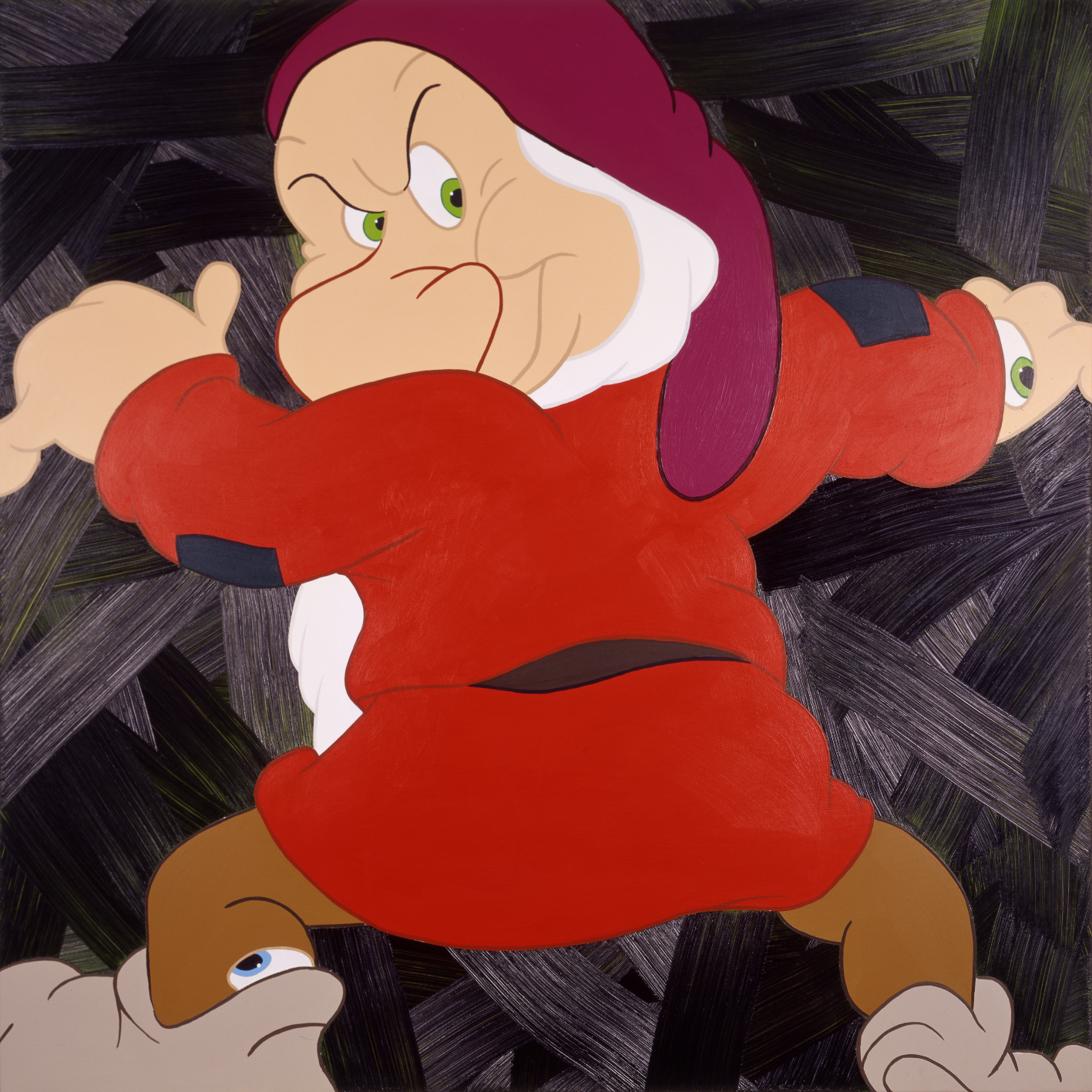
However, with Ivan Fayard, the flies’ purpose is not to “fool the eyes by making the detail of the image come towards the spectator, as though it exited from the painting’s surface.” (4) First of all because they’re not painted in a hyper-realist manner, followed by which, they’re repeated so many times on the paintings that we forget them as such, seeing only the fly-blown shape of the target. The to-and-fro between the reduced scale of the insects and that, much larger, of the target contributes to the painting’s dynamic. In a complex way, the works belonging to the Musca(s) series readdress the focal point in painting. This dimension was already present in some of Fayard’s earlier paintings, but from another angle: that of the representation of the eye. Noir sur vert (2002) is a painting depicting a dwarf inspired by Walt Disney’s Snow White and the Seven Dwarves, painted from the back, on a black background that eliminates all context. His legs and arms spread as though undergoing a body search, he turns his head towards the spectator, who he observes with a mocking air. The reading of the painting is directed towards the dwarf’s gaze at us. But it is disturbed by the presence of unexpected elements, which introduce a fracture: a green eye transplanted on the back of the dwarf’s right hand and another blue one that breaks loose from the Achilles’ heel of his left leg. In Soualau (2003), another dwarf falls headfirst. A leg smaller than the rest of his body emerges from the sleeve of his tunic, forming, moreover, a strange angle. Equally surprising, the dwarf hides his eyes so as not to see where he’s falling. Slapman (2003) presents a third dwarf, whose face is merely a shapeless mass, pale blue, lacking features, which bears the imprint of a barely perceptible hand and an anus instead of a mouth. Lastly, with Who is Afraid of Pink, Guston and Blue (2002), whose title appropriates that of a series by Barnett Newman (5), Fayard meets different kinds of gazes: that, masked, of Dalmation puppies whose eyelids open on areas of flat mauve; that, wild, of an adult Dalmation dog whose body has a human head; the fixed and inexpressive gaze of another dog whose head seems to belong to a scarecrow; and that, inquisitive, of a last dog which has a blue body, with a broom instead of a face. The absent, blind, fixed or enlarged gaze is the common point between these paintings, which belong to the Usurpateurs series. Through the elimination or multiplication of eyes, and the intersecting of several regimes of vision, Fayard hides the fixed point to which our gaze tries to cling. He restores this focal point in the Tondibulles (2001). Adopting the tondo format, the artist has painted eyeballs, one per painting. Here, the eye is no longer a disturbing detail in a composition, but the works’ very subject. Each one of them is a kind of Cyclops without a body, which stares at the spectator without blinking. Sometimes the eye is centred, but most often, it leans towards one of the painting’s edges, as though to depict a fishy, menacing gaze. When the Tondibulles are hung together, as was the case during a Fayard exhibition (6), the repetition of the eyeballs creates a sensation of vertigo. We are looked at by what we see: a kind of monster whose only organs, spaced out one from the other, would be eyes. In the mural and paintings grouped together under the Spermators (2004-2005) title, Ivan Fayard again represents eyes, but this time by deforming them. The sole eye of Spermator #16 (2005) is stretched and endowed with a kind of tail or flagellum. Spermator #19 (2005) is made up of a pair of eyes, one of which, seen front on, trickles, collapsed in the shape of a tear, while the other, three-quarter on, is turned to the left. As with Georges Bataille, the eye in this series is sometimes an egg, the white of the eye changing into egg white (7). Only two elements are missing for the Bataille equation – the eye becoming egg then testicle and, lastly, breast – to be complete. The canvases, most often painted in black and white, can also evoke Dali’s limpness, which is to say the deliquescence of the form which strives for disappearance or metamorphosis. One of the “shaped canvases” of the Spermators series, titled Je veux ce que tu veux (2005) has, moreover, a lot of the butterfly about it, emblem of metamorphosis.
(1) According to an expression employed by Michel Gauthier in “Shimmy II”, L’Œil moteur: Art Optique et Cinétique 1959-1975, the catalogue of the eponymous exhibition presented at the Museum of Modern and Contemporary Art of Strasbourg, 13 May – 25 September 2005. Éditions des Musées de Strasbourg, 2005, p. 246.
(2) Vincent Pécoil in “Steven Parrino. Hantologie”, 02 n. 34, p. 14.
(3) Giorgio Vasari, Lives of the Most Excellent Painters, Sculptors and Architects, quoted by Daniel Arasse in Le détail. Pour une histoire rapprochée de la peinture, Flammarion, Paris, 1992, p. 79. Concerning this, we note that Daniel Arasse claims that “Giotto never painted such a fly: this practice was not customary during his era, and Vasari, obviously, knew it.” Lie for lie, this story is nothing but a fiction.
(4) Daniel Arasse, op. cit., p. 80
(5) Barnett Newman, Who’s Afraid of Red, Yellow and Blue? (1966-1970).
(6) Ivan Fayard, exhibition at the Château des Adhémar, Montélimar, 2002.
(7) See Georges Bataille, Story of the Eye, Penguin Modern Classics
* * *
La peinture pour cible
Par Pierre Tillet
Ce motif a connu un immense succès dans l’art du XXe siècle. Représentée dans des oeuvres innombrables allant des Roto-reliefs de Marcel Duchamp aux tableaux de John Tremblay, en passant par les disques solaires de Robert Delaunay, l’Optophone de Francis Picabia, les Cercles polychromes de Julio Le Parc ou les Targets de Jasper Johns, la cible est un archétype de « l’idéal de maîtrise perceptive » (1) propre au modernisme. Associée à la notion de plaisir rétinien, elle fixe le regard sur un point focal autour duquel tout s’organise. Elle n’a d’autre visée que d’attirer l’oeil au centre. Sa structure géométrique l’impose comme une évidence, à tel point qu’elle ne semble appartenir ni à l’abstraction, ni à l’art figuratif, mais à l’un et à l’autre en même temps. Bref, la cible réalise l’avènement de la « bonne forme ». S’attaquer à la cible, c’est remettre en question une certaine forme de purisme. C’est ce qu’on fait notamment Ugo Rondinone, dont les cibles floues rendent impossible toute mise au point optique, John Tremblay, en étirant le motif ou Jim Lambie, qui a réalisé des cibles aux bandes si rapprochées qu’elles en deviennent aveuglantes. Avec les oeuvres de la série Musca(s) réalisées entre 2005 et 2007, Ivan Fayard s’inscrit dans la problématique consistant à brouiller la cible. Si l’on considère leur processus de production, ces peintures sont d’abord des panneaux gris. En ce sens, elles renvoient à la tradition du monochrome, qui « a hanté l’abstraction depuis ses débuts comme le spectre de sa fin possible, cette fin de la peinture annoncée une première fois avec fracas par Rodchenko » (2). Derrière le plan lisse du monochrome, il y aurait donc le cadavre de la peinture. Or, à la surface de ses panneaux gris, Ivan Fayard a peint des centaines de mouches stylisées, comme pour signifier qu’il y avait encore de quoi se nourrir sur ce cadavre. Ces mouches, symbole de la vanité ou élément du maquillage des élégantes au XVIIIe siècle, sont alternativement blanches et noires. Cette alternance dessine des rayures concentriques qui forment sur le voile gris du monochrome – ou plutôt en dessous, dans la mesure où les mouches semblent creuser le tableau, lui donner une profondeur – une cible. Mais cette cible est corrompue. S’il restaure une certaine peinture géométrique en introduisant un virus dans le monochrome, Ivan Fayard prend en même temps ses distances avec elle, il l’aborde avec ironie. Le choix de la mouche comme unité dont la répétition forme le motif du tableau n’est pas innocent. Incidemment, les nuées d’insectes présents dans les oeuvres de la série Musca(s) rappellent une anecdote rapportée par Vasari. Selon ce dernier, « Giotto, dans sa jeunesse, peignit un jour d’une manière si frappante une mouche sur le nez d’une figure commencée par Cimabue que ce maître, en se remettant à son travail, essaya plusieurs fois de la chasser de la main avant de s’apercevoir de sa méprise. » (3) Pourtant, avec Ivan Fayard, les mouches n’ont pas vocation « à tromper les yeux en faisant venir le détail de l’image vers le spectateur, comme s’il sortait du plan du tableau. » (4) D’abord parce qu’elles ne sont pas peintes de manière hyperréaliste. Ensuite, parce qu’elles sont répétées tant de fois sur les toiles qu’on les oublie en tant que telles pour ne plus voir que le motif mité de la cible. Le va-et-vient entre l’échelle réduite des insectes et celle, beaucoup plus grande, de la cible contribue à la dynamique du tableau.
D’une façon complexe, les oeuvres de la série Musca(s) renouent avec la focalité en peinture. Cette dimension était déjà présente dans certaines toiles antérieures d’Ivan Fayard, mais sous un autre aspect : celui de la représentation de l’oeil. Noir sur vert (2002) est un tableau montrant un nain inspiré du Blanche-Neige de Disney, figuré de dos, sur un fond noir qui supprime tout contexte. Les jambes et les bras écartés comme s’il subissait une fouille au corps, il tourne la tête vers le spectateur qu’il observe d’un air narquois. La lecture du tableau est orientée vers le regard que le nain porte vers nous. Mais elle est perturbée par la présence d’éléments inattendus, qui introduisent une rupture : un oeil vert greffé sur le dos de la main droite du nain et un autre, bleu, qui se détache sur le talon d’Achille de sa jambe gauche. Dans Soualau (2003), un autre nain chute la tête la première. Une jambe plus petite que le reste de son corps émerge de la manche de son habit, en formant de surcroît un angle anormal. Tout aussi surprenant, le personnage se cache les yeux pour ne pas voir où il tombe. Slapman (2003) présente un troisième nain dont le visage n’est qu’une masse informe, sans trait, bleu pâle, qui arbore une empreinte de main à peine perceptible et un anus à la place de la bouche. Enfin, avec Who is afraid of Pink, Guston and Blue (2002), dont le titre détourne celui d’une série de Barnett Newman (5), Ivan Fayard croise différentes sortes de regards : celui, occulté, de chiots dalmatiens dont les paupières s’ouvrent sur des aplats mauves ; celui, halluciné, d’un dalmatien adulte dont le corps porte une tête humaine ; le regard fixe et inexpressif d’un autre chien dont la tête semble provenir d’un épouvantail ; et celui, inquisiteur, d’un dernier chien au corps bleu, doté d’un balai à la place de la face. Le regard absent, aveugle, figé ou démultiplié est le point commun de ces tableaux qui font partie de la série des Usurpateurs. Par la suppression ou la multiplication des yeux, par l’entrecroisement de plusieurs régimes de vision, Ivan Fayard dérobe le point fixe auquel notre regard cherche à s’accrocher. Ce point focal, il le restitue dans les Tondibulles (2001). Adoptant le format du tondo, Ivan Fayard a peint des globes oculaires, un par tableau. L’oeil n’est plus ici un détail troublant dans une composition, mais le sujet même des oeuvres. Chacune d’elles est une sorte de cyclope sans corps, qui fixe le spectateur sans ciller. Parfois l’oeil est centré, mais le plus souvent, il penche vers un bord de la toile, comme pour figurer un regard louche, torve. Quand les Tondibulles sont accrochés ensemble comme ce fut le cas lors d’une exposition d’Ivan Fayard (6), la récurrence des globes oculaires crée une sensation de vertige. Nous sommes regardés par ce que nous voyons : une sorte de monstre dont les seuls organes, espacés les uns des autres, seraient des yeux. Dans les peintures murales et tableaux regroupés sous le titre Spermators (2004-2005) Ivan Fayard représente encore des yeux, mais en les déformant. L’oeil unique de Spermator # 16 (2005) est étiré et doté d’une sorte de queue ou de flagelle. Spermator # 19 (2005) est constitué d’une paire d’yeux dont l’un, vu de face, dégouline dans un effondrement en forme de larme, tandis que l’autre, de trois quart, est tourné vers la gauche. Comme chez Georges Bataille, l’oeil dans cette série se fait parfois oeuf, le blanc de l’oeil se changeant en blanc de l’oeuf. Il ne manque que deux éléments pour que l’équation bataillienne - l’oeil devenant oeuf puis testicule et enfin sein - soit complète (7). Les toiles, peintes le plus souvent en noir et blanc, peuvent aussi évoquer le mou chez Dalí, c’est-à-dire la déliquescence de la forme qui tend vers la disparition ou la métamorphose. L’un des shaped canvas de la série Spermators, intitulé Je veux ce que tu veux (2005) a d’ailleurs tout du papillon, emblème de la métamorphose.
(1) Selon une formule employée par Michel Gauthier dans « Shimmy II », L’OEil moteur, catalogue de l’exposition éponyme présentée au musée d’Art moderne et contemporain de Strasbourg du 13 mai au 25 septembre 2005. Éditions des Musées de Strasbourg, 2005, p. 246.
(2) Vincent Pécoil dans « Steven Parrino. Hantologie », 02 n° 34, p. 14.
(3) Giorgio Vasari, Les vies des meilleurs peintres, sculpteurs et architectes, cité par Daniel Arasse dans Le détail. Pour une histoire rapprochée de la peinture, Flammarion, Paris, 1992, p. 79. On notera à ce propos que, selon Daniel Arasse, « Giotto n’a jamais peint une telle mouche : la pratique n’était pas de son temps, et Vasari, évidemment, le savait. » Mensonge pour mensonge, cette histoire n’est donc qu’une fiction.
(4) Daniel Arasse, op. cit., p. 80.
(5) Barnett Newman, Who’s afraid of Red, Yellow and Blue ? (1966-1970).
(6) Ivan Fayard, exposition au Château des Adhémar, Montélimar, 2002.
(7) Voir Georges Bataille, Histoire de l’oeil dans Oeuvres complètes, Gallimard, 1970, t. I
* * *
‘The Sharp Discontinuity in the Grasp of a Single Glance’ by Ivan Fayard
Text of the exhibition at the Crac Alsace, Altkirch, France (english/français)
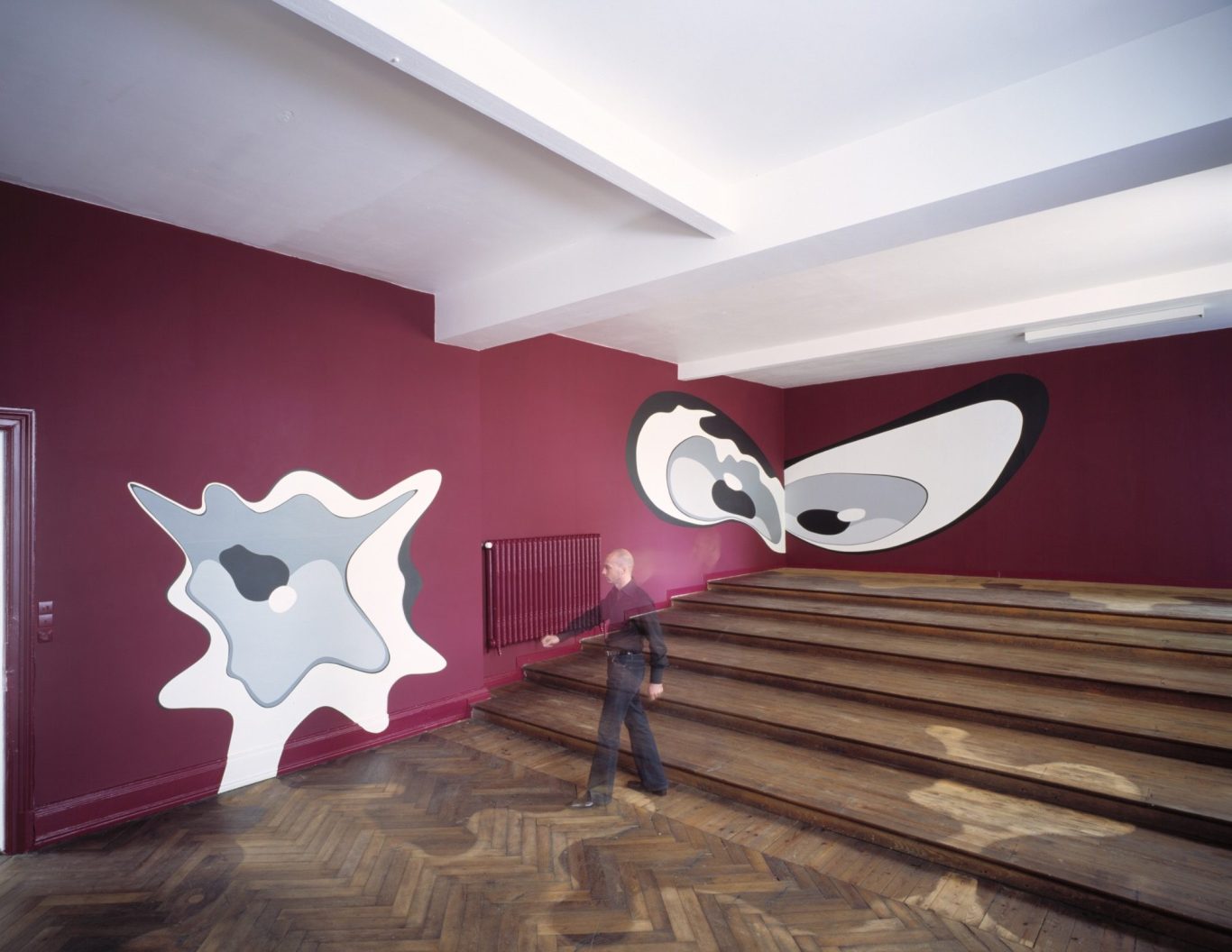
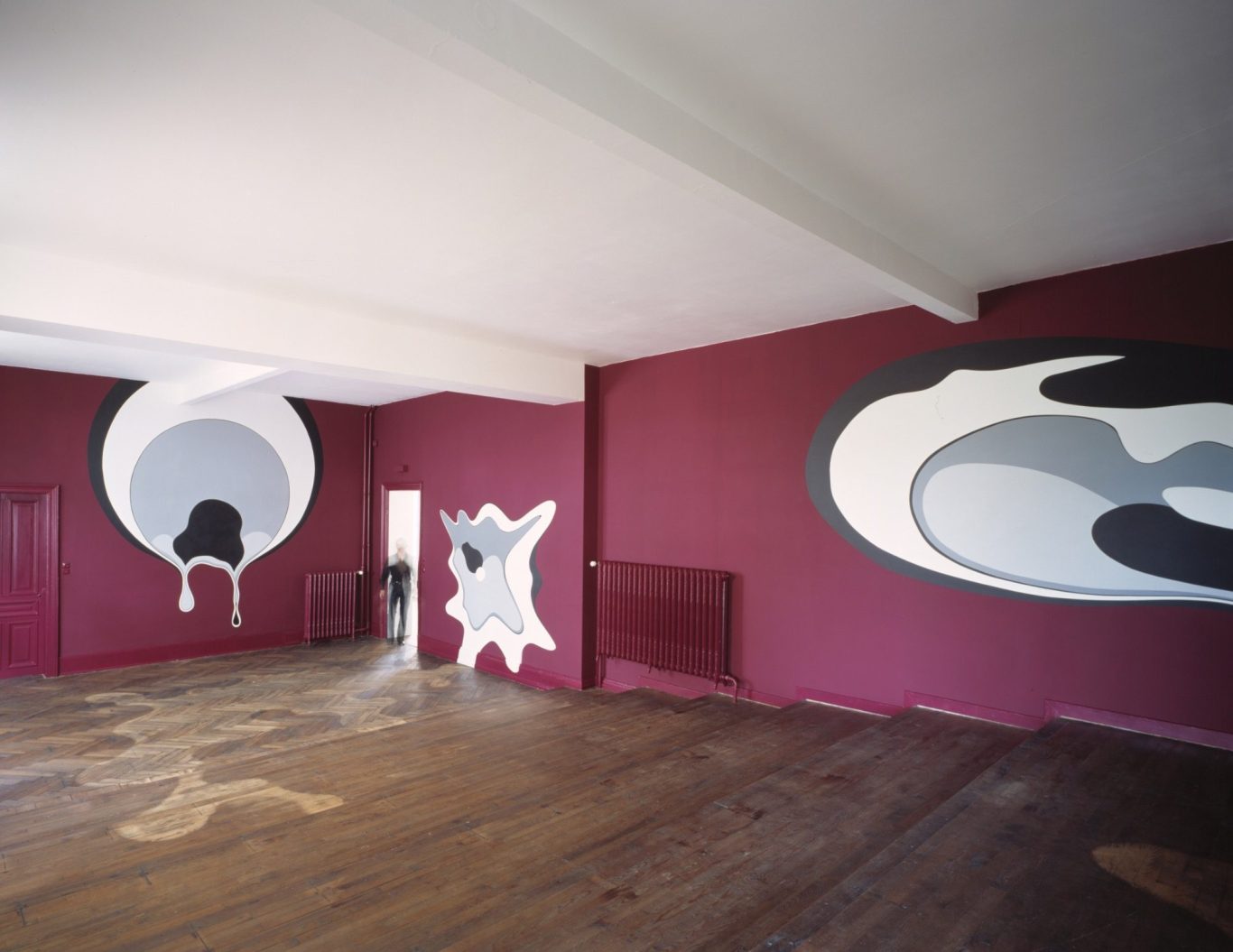
From the outset, this room has reminded me of a certain kind of cinema. This resemblance is my point of departure in « The Sharp Discontinuity in the Grasp of a Single Glance ». I was first interested in making links between cinema, literature and a kind of physical experience that is possible with painting. The piece is the creation of an atmosphere that is unfamiliar and slightly bizarre, a mixture of the fascinating and the grotesque, the only colour used in the installation being the shade of Dracula’s coffin lining. The mixture is made by way of an aesthetic that is violent and physically potent. « The Sharp Discontinuity in the Grasp of a Single Glance » is also a very distant echo of German expressionist cinema. But it is more a glimpse of this style than a celebration or an hommage to that tradition. If I evoke Robert Wiene’s film « Das Kabinett des Doktor Caligari » it is because the film presents itself by means of disquieting sets that are entirely painted. The make-up and gestures are violently stylized , the trompe l’oeil sets characterized by tortured, oblique lines and devoid of right angles. In this film, reality has disappeared. In a way, this is what I want my current work to be — the antithesis of realism. There is no narrative dimension in the strict sense — only the possibility, perhaps, of a kind of personal narrative of which the viewer is the only author.
* * *
D’emblée, j’ai été frappé par le lien entre cette salle et une certaine idée de ce qu’est une salle de cinéma. Ce fut mon point de départ. Dans « The Sharp Discontinuity in The Grasp of a Single Glance », je me suis d’abord intéressé à établir des liens entre le cinéma, la littérature et une forme d’expérience physique que l’on pourrait faire avec la peinture: Créer une atmosphère étrange aux accents bizarres, un mélange de fascinant et de grotesque (la couleur de l’intérieur du cercueil de Dracula, seul couleur de l’installation), à travers l’utilisation d’une esthétique violente et physiquement forte. Car « The Sharp Discontinuity in The Grasp of a Single Glance » est aussi un lointain, très lointain écho au cinéma expressionniste allemand. Mais c’est davantage un clin d’oeil qu’une célébration ou un hommage à celui-ci. Si j’évoque le film de Robert Wiene « Das kabinett der Doktor Caligari », c’est avant tout parce que le film s’impose par ses décors déstabilisant entièrement peints. Les maquillages et gestuelle sont violemment stylisés, les décors en trompe-l’oeil sont striés par des obliques comme « tourmentées» et dépourvus d’angles droits ou lisses. Dans ce film, la réalité n’est plus. C’est en quelque sorte ce que je veux de ma pièce: que ce soit une antithèse du réalisme. Il n’y a donc pas de dimension narrative stricto sensu, hormis, peut-être, une forme narrative personnelle dont le spectateur serait le seul auteur.
Ivan Fayard